Industry 4.0: Skills management and industrial transformation

In recent weeks, the industrial sector has caused a lot of ink to flow. Between reindustrialization, deindustrialization, creations, closures, recruitment, training, and many other subjects, articles have not been lacking. olome has communicated on these issues.
See Reindustrialization in France is not dead
Behind this strategic sector, pillar of the French economy, are people. The employees of the industry are the crucial links that make the company live. Without them, the machine jams. Without them, the company ceases to exist. Their knowledge and skills constitute the very essence of the industry.
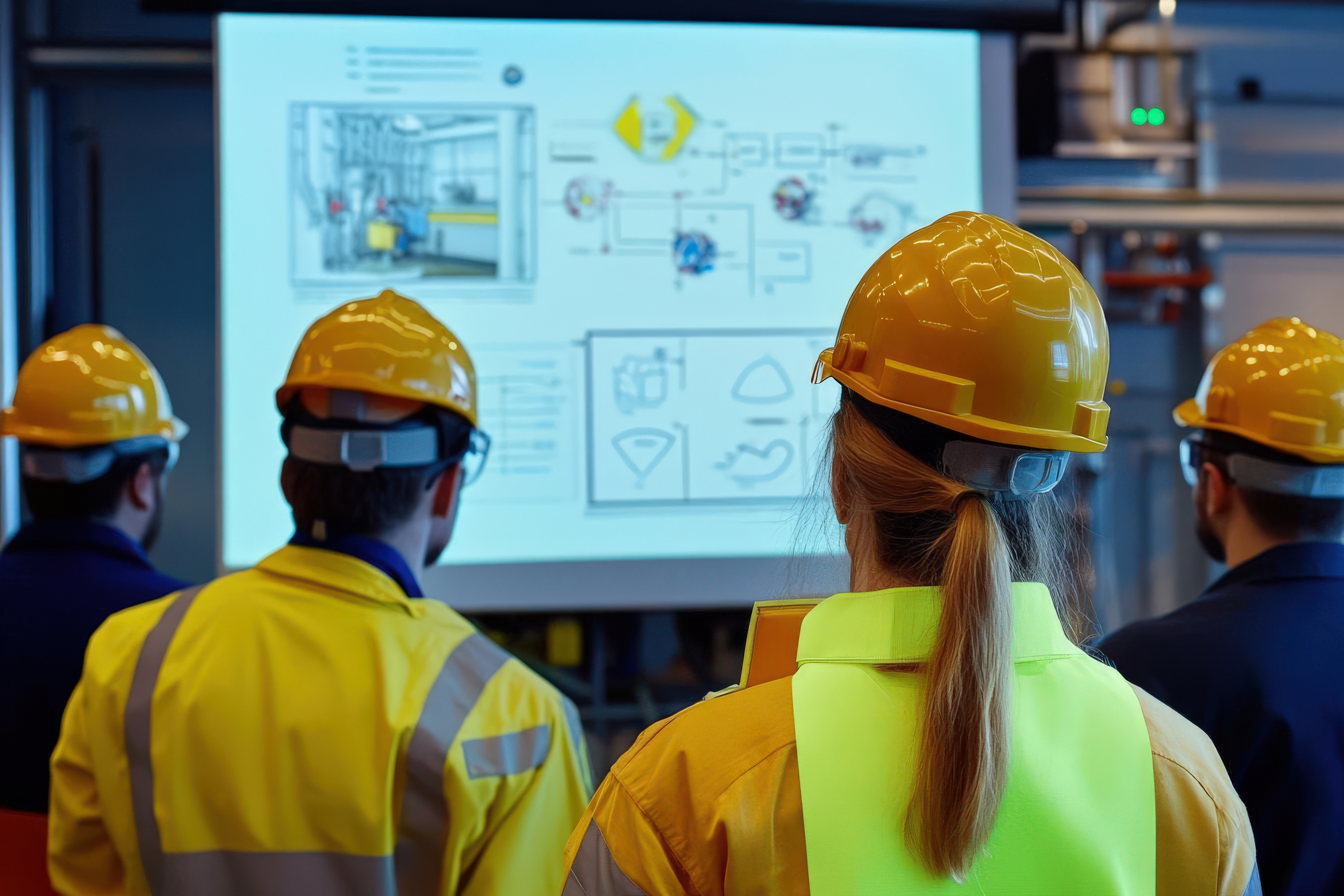
Training an employee takes time, money and energy. It is a major investment. Each departure represents a cost because it is difficult to recover the experience acquired. Taking care of employees is paramount. They are an essential lever for growth.
Good recruitment is only the tip of the iceberg. At the end of November, the DGE (Directorate General for Enterprises) organized a webinar on recruitment and training in the nuclear sector. This reminder highlights the importance of having well-trained and competent employees.
A study conducted by IBET, the Industry of Well-Being at Work, reveals that the cost of disengagement per employee per year is €14,580, or more than €1 million over 7 years for 10 employees. According to Centre Inffo, "for employees training within their company, the average unit cost of training benefiting from public or mutual financing amounts to 622 euros in 2022". Skills management is a major challenge. It can become a strategic tool in managing a company's budgets if it is well mastered. It can thus reduce the hidden cost linked to staff disengagement often caused by a lack or insufficiency of training.
In a world where everything evolves quickly, advancing your staff at the same pace as technological transformations, particularly in the industry, is crucial to remain competitive and survive.
Understanding the skills of your collaborators allows not only to identify their knowledge, but above all to adjust training to their specific needs.
Certain industrial professions require specific qualifications and compliance requirements. For example, welding professions require technical mastery in fields such as mechanics, electricity or metallurgy. With Industry 4.0 this profession is evolving rapidly and its working methods are transformed. General qualities such as attention to detail, teamwork or time management are just as essential.
The industrial sector is also marked by permits and CACES, necessary to operate certain machines. These certifications must be renewed at precise dates, which vary according to employees. Employee A will not have the same date as Employee B nor, sometimes, the same permit. Managing these deadlines, which sometimes differ even within a team, is a major challenge.
Finally, Industry 4.0 has revolutionized all sectors. From agri-food to nuclear, digital technology is imposing itself by modifying everything in its path. Skills and authorization management does not escape this transformation.
Tools like olome People are of great help. Tasks such as collaborator management, document management, equipment allocation or training and certification tracking are facilitated. It is easier to prepare for audits thanks to an export of required documents and traceability of modifications.
In the agri-food industry, a sector particularly demanding in terms of hygiene and element handling, the spider map will allow identifying the level acquired for each training. It becomes possible to determine if there is a need for reinforcement, whether individual or collective. This function highlights strengths as well as areas for improvement.
Among digital solutions, olome People goes further by actively involving employees in the management of their skills. Thanks to their personal dashboard and collaborator view, employees can follow their progress and self-train autonomously. Managers are empowered and more involved in the skills development of teams. They can quickly identify points of frustration and unlock situations on possible evolutions.
Because it is sometimes difficult to reveal hidden talents, these tools facilitate internal mobility by optimizing career management. The more skills are mobilized in a relevant way, the more the company maximizes its efficiency and overall performance.
By aligning the needs of employees and the company, this type of tool promotes joint evolution, preserves competitiveness and guarantees employability. It therefore contributes to the flourishing of the French industrial sector.